
At least my 1st graders do.
One asked me last, last week why our class map making was so really hard to accomplish and went on to express that it was difficult to "get it done right." Especially using this abjectly dysfunctional set of tools I had out to do it, a few crayons, rulers, and a very old idea.
You know the idea....We'd try to map "our room." Here's a pretty good one made by a very enthusiastic child, that's "her" on the Map:

I brought in a few maps of Disneyland, The Santa Barbara Zoo and Magic Mountain too, noticing that they could use them pretty handily to explain to me "things they've seen." A great, great project I must do is treasure mapping. I almost forgot the fun of that.
A good follow up I'll have to plan ASAP. Another idea to follow up will be when I finally get it set up is this trip to the Santa Barbara Botanical Gardens ( I want to take them to see the forest) where the map will help take us on the tour. I need to get that going.......ah stuff to do ever looms.
I remember making maps when I was young, of my state, of the yard, lots of applications. old days.
Google Earth has just transformed the old "My Place In Space" lessons.
What a wonder that is now. I cannot load it on the kid computers in my classroom and with budget issues 14 year old machines will stand like memorials to "what could be."
(they basically are to old to ever use as they won't load) but on my teacher station I can load it, as well as project it via the new projector. So we try to see it but it's dim to see.
I'm still not sure how to fully use this terrific tool, Google Earth. But I can fumble my way into showing our town and move around a bit here to there. That's incredible.
Downloading it has been intimidating enough... plus I can only think of my hometown to look up dreading seeing how it has changed as I myself experiment. I failed to recognize my own old house from over head, even my present house seemed odd. I guess we do see with the "mind's eye," quite a bit of reality has me still spinning looking down like this at my hometown, my present location but oddly our school was exactly like I picture it, really pretty ugly.
When your District allows you to use Google Earth with equipment per child available that can run it, this must transform school geography lessons. I cannot imagine. Or if you have the computers to run it (that I do not have) your teaching would be transformed. On the white boards that our tech person has personally prevented, it must just be absolutely stunning.
In a way I feel my lesson with the kids, drawing their room, a bit of the dinosaur now. Better I took pictures that we zoomed and then used as our starting place, then placing them on a "map." Yeah, we could use photo's in some way if I get the time to think.
Well, anyway we were in the process of trying to draw a room map after reading a sweet book called "Me on the Map" by Joan Sweeney from their reader.
 Cute story with interesting ways of moving from a room in a house, to the street, to the neighborhood, to town, state, county, world views. There are several of these by this author, Me and My Family Tree, one about Time, and I recommend them all. Heartily.


For some kids just now as we work I'm watching them understand this idea of "place" for the first time. It's all in a theme called Home Sweet Home , a part of ten themes we cover in 1st grade. One I don't mind at all except for the lack of time to do it well.
The interesting thing about the year is that I have arranged some art projects into the pieces in ELD, and into the reading, language arts, social studies units so that earlier in the year the children made large works of the neighborhood, as we worked forward to this theme. We started there in the ELD year, looking at our understandings of needs of communities and services, places we go, places we like. A commonality of how we understand the city and town functioning for people in these communal services. Until we got here to mapping.
Last week as this evolved we read another book. It began with the word "this."
And that took me to some very interesting lessons.
I have several This books.
One is Cherries and Cherry Pits,
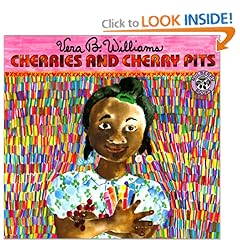
an outstanding community builder I really love about a little girl that saves cherry pits to rejuvenate her neighborhood with cherry trees. You can read how much I do love it here. It is the perfect book for Black History Month.....and those blogs are coming soon.
The one we read about THIS.....was This Is My House. If you are a primary teacher add it to your collection. It'll blossom for you.
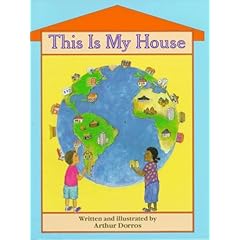
In this book they begin each sentence with This is my house....going to 22 locations drawn to show the diversity of homes on Earth, it's darling and the demonstrative pronoun "this" is so there. What is cool is that in 22 languages you learn to say and pronounce "This is my house" in that language. Fascinating for everyone. We read it many times to try to remember how to say something in another's language.
I really appreciate the immediacy of the child voice in that text.
There are many other great books on homes in my book box, here's a few I like:



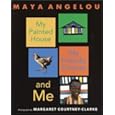


The last one is a real personal favorite. I have it as a big book, it's a delight made at a time when books helped us imagine. And please try The Little House and if you have time read this review I once wrote. It's wonderful.

When I was "told" my theme would be "Home Sweet Home" in my 5th unit of study in 1st grade I thought of this book. Though I am not asked to think of anything. We read it for years gone by in primary classroom instruction, and I ordered it again to read when I had a moment for this unit. That time came today as the children in Room 10 listened for our "key vocabulary" and were enchanted as children have been since the 1940's release of a story about a house becoming obsolete, aging, being replaced by future building while in her day representing the best of her times and quite possibly representing a kind of beauty that can only be understood and appreciated within her true and original context.
This is a story of a beautiful Little House written by the genius of Virginia Lee Burton. She sits "way out in the country" built strong and sturdy, never to be sold for generations of a family to endure within her safe haven. She is happy, she is stable, but she “sees” the lights of the city and she is curious. At this point I feel it safe to interject as a young girl growing up in West Virginia far from city and growing up in the peace of country these words spoke to my heart. I wondered about the city too, wanted to know. I saw the changes in my world, saw future, recall first days seeing a tape recorder, recall the ideas of fast food and the movement of our life into the age of rocket and moon. A great story to explore metaphor with children. How are we like the Little House, how am I?
In the story the Little House watched the seasons, learned the cycles of nature and the book does such a lovely job placing the child reader or listener into this rural setting. For me it is a perfect telling of the naive Garden of Eden before the Fall construct, gamboling, rural, naturalistic with the seasons each illustrated and reinforced with charming traditional illustration for the child. But as the story unfolds the lights of city grow closer with changes entering text and illustration. I grew up with many of these changes, but it tells of horses replaced by roads and machine....Time is passing in the story, an age of mechanized progress enters the pictures.
Gasoline, speed, faster and faster are introduced as concepts that drive the forward progress around the Little House. She is now shown surrounded by track homes, darker clouds, and telephone poles. Crowding enters the page. Artistically it is busy, congested, more active visually, less peaceful. Now the Little House can't be sold, not because of the eternity of a family staying on her piece of land, but because a city has engulfed her and she has no worth relative to the expansion. She sits surrounded now pictorially by building. Written as it is, my classroom children found this "sad”, or asked repeatedly if she would "die". I kept saying let's wait a bit and see....but I knew their concern. It would seem headed for sad death. If I were to relate to the Little House metaphorically I feel myself as a teacher as these pages represent, surrounded by the mindless march of time. Looked at as valueless, seen as out of place in a world of "progress”. And the Little House misses her fields and flowers accepts this must be "the city" and wonders if she likes it or not.
I must admit I did stop reading here to ask children if they thought this was the life the Little House was "supposed " to live. One child speaking carefully said, " It is the life that she must accept." Another commented, "I know the Little House wanted to see the city but now she can't go back." Such it is when we leave Eden, such it is when the march of progress strips our naivety. Such is taking on our adulthood. Now we are to reconcile truth, reflect, make meaning and find ways to face what we must. To decide based on our rational mind combined with an awareness of things we could never have fathomed and indeed may not understand fully once revealed. The Little House stands swallowed by city, speed, time, and unable to feel season or know her truths at all.
Buildings are torn, replaced and destroyed around he….r as progress destroys what was replacing it with what is. Here my students shook with, "Oh no's" and statements like this one, "Oh she's going to die and never know her happiness." It is a point of despair, and interesting thing to place before children. Certainly this is the point in the story that I feel speaks with greatest power. And she decides that she cannot like this place that has grown around her. She has no way to relate to it. It is not a city able to even remotely understand what this Little House knew. Not even listening they are of two different worlds. And she admits sadness. She is filled with sorrow and becomes really broken down and lost.
The ending of the story is about hope. A many generation removed child of this house buys her again, restores and moves her far from city, back to country where she takes her knowledge within her walls and in the calm of the beauty of nature silently resumes her peaceful balance. Once more able to be who she is. Understanding in some way where she has been. Understanding now no longing for that other place. She has conquered longing.
To this tale my students sat in silence and in contemplation. I asked if they would like to draw this little house and all students, all, represented her in the country, in bucolic setting and at the bottom all wrote Home at Peace a phrase they asked me to spell. I'll post these when I find the digital camera. It’s a wonderful story fit for any 1st grade as relevant now as ever.
We move on so quickly in our pacing you cannot really develop meaning in the current "situation." No stopping to smell the roses, little house style. But these pieces are really good ones for the kids to explore.
Favorites.
I discovered with the use of "this" and "that" in my ELD lessons that children really struggled employing just those terms, so for several days we did lessons I thought were going to be easy, or even silly that turned out to be difficult and actually revealing and thus interesting.With more time I'd have developed a book making project. That's gone now too. No one makes anything now.
One day, during a teacher observation, I asked them to take a favorite crayon and say within a framed context, "This is my favorite color, blue," then going on with a partner, "That is your favorite color orange." One would think these demonstrative pronouns in this form super easy, they were not, and this frame took days during which I learned 1st graders struggle a great deal reversing from speaking of themselves to speaking of another's preferences.It required practice.
I learned that time is framed by "this and that" and that my students weren't so clued into those understandings.
I also learned about immediacy and about how we mark time in language and the benefit of my teaching to that verbal cluing in more explicit ways was necessary. I had presumed understandings. In fact since I am very interested in "change" in "time" and in growth I started to see the value in setting up more opportunities to take these structures I do see in the children's text, like the "this is" set up and employing it into actual child language practices.
We tried "This is my house and I like that it______." Among many other verbal ELD practices. So for a week we did a lot of "this and that" and it was interesting work.
I think for me the most interesting part was in understanding how reversing from say your own favorite into stating a partner's cause a real processing that was tangible. It hung in air.
This took me to recalling a book where this functioned rythmically.......
Bringing me to our Reading Rainbow reading of the Kapii Plain book , there "this" is employed with great reasonance through the text

"This is the great Kapiti Plain all fresh and green from the African rain..."
....as the children explored a book and a show about myth structures/story for explaining life happening mysterious/wonderous things and scientific explanations by looking at the weather. Here our community has been experiencing rain, not at all common, and very exciting for children. This AM lightening and thunder actually rolled. Quite wonderful.
Children in 1st grade in my room are in weather units so in some way all of this kind of ties loose ends or pulled together into good connected learning, a rareity in workbook days. Making daily weather observation journals out of calendars I wish I had picture taken to show.
We mapped our model homes on our "dividers" (so we can work in privacy) in table neighborhoods, these need a bit of finishing but are very cool...


So we illustrated and retold the tale. The kids made cool pictures of that too.


How they see always is so rich and revealing.
Looking at these pieces tells you a lot about how they see, how scale and vocabulary interact with being able to speak to understandings. I, probably due to my training in art and with children, see a lot in a map making experience about their cognitive development.
So I would like here to share some of these pieces, I'll place in slideshows. It appears few ever really actually look at these, but I still enjoy them as representative of their work. Ha!
What I see looking at these things in this format is how my class has progressed in an ability to speak visually and verbally to their meanings. For my students, language often stands between them and their meanings. It's a great deal of the reason many teachers stick with basic skill drill and the very limiting workbook practice, so little is then asked of the language and in such ritualized structure the chances and opportunities to speak control away the tension.
I think it's easier also to work filling in spaces on a worksheet. But is it better? And is it better to structure a sentence and have each child ritually say it to the other, does language evolve in 6 year olds that way? No, of course it really doesn't. Figuring out how to effectively build language practice is an art too of a kind. So one of the things I'm doing is providing a vocabulary with different repetitions and in a way expansions to allow us to gather our words.
So take the mapping. By years end we will make a concept map of community, map our room at home, map the classroom, map to a model with playdough and milk carton of the community, use maps visiting places, drawing in differing formats, so it seems to have established in a variety of ways for my children the idea that a map "looks" down on us from a vanishing point. I see that line was crossed in their recent work. That's a level of sophistication in thought.They seem "there."

Those drawings were wonderful too and showed me a lot.
Well there we have it, just a look in at my Sheltered Immersion 1st grade. What's happening!
No comments:
Post a Comment
I am now moderating comments.